
HR Professionals – Build Resilience and Improve Your Wellbeing
HR Professionals – Build Resilience and Improve Your Wellbeing
What a time to be an HR professional! You will need to build your resilience and improve your wellbeing!
You are the frontline key workers keeping UK workplaces operating and running as smoothly as possible in these unprecedented times!
Not only are you are helping organisations and their employees adapt to the current Coronavirus pandemic and adjust to very different circumstances.
You, yourself are having to adapt your ways of working too.
It’s called Human Resources for a reason.
But during these testing and difficult times, who is looking after the HR professionals?
Therefore, now more than ever, building resilience and developing good wellbeing habits are fundamental in your own personal and professional development.
Resilience
One of my favourite quotes describing resilience is from Psychology Today,
The psychological quality that allows some people to be knocked down by the adversities of life and come back at least as strong as before. Rather than letting difficulties, traumatic events, or failure overcome them and drain their resolve, highly resilient people find a way to change course, emotionally heal, and continue moving toward their goals.
In a nutshell, resilience can be defined as the ability and tendency to bounce back. But what does that mean practically and why is it important?
Resilience enables us to develop protection against experiences which could be overwhelming. It can also help to maintain balance during stressful periods and protect us from the development of some mental health problems.
The current Coronavirus pandemic is probably one of the most stressful times you will ever have experienced as an HR professional.
So, what can you do to build your resilience and look after your health and wellbeing so you can improve your performance and look after others to the best of your ability?
Emotional Intelligence for Resilience
Improving your Emotional Intelligence is probably the most essential thing you could do to give you the skills and confidence needed to deal successfully with the constant challenges and changes within the workplace.
Emotional intelligence is the ability to understand and manage your own emotions positively to reduce stress, overcome challenges, defuse conflict, communicate effectively and empathise with others.
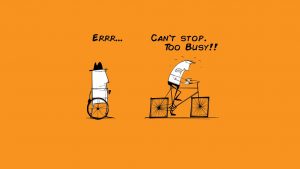
Not only can emotional intelligence affect your performance at work, poor emotional intelligence can negatively impact on other areas of your life;
- Physical Health – Uncontrolled stress can lead to high blood pressure and suppress the immune system. It can also lead to fertility issues and speed up the ageing process!
- Mental Health – Uncontrolled stress can increase your vulnerability to anxiety and depression. In turn, this can leave you feeling lonely and isolated, further increasing mental health problems.
- Relationships – Not being able to understand how you and others are feeling can lead to poor professional and personal relationships.
- Social Intelligence – Poor social intelligence can leave you vulnerable to isolation. A poor measure of people’s intentions can leave you feeling insecure and unhappy.
If you break emotional intelligence into different components you will find:
- Self-Management
- Self-Awareness
- Social Awareness
- Relationship Management
What skills do you need to develop your emotional intelligence and what will help you apply them to everyday situations?
1. Self Management
Increased stress can lead to the inability to act thoughtfully and appropriately. You must be able to use your emotions to make practical decisions about your behaviour.
Think about a time when you were overwhelmed with stress. Was it easy to think clearly or make a rational decision? Most Likely Not.
Stress takes us out of our comfort zone, we can lose control and feel overwhelmed.
Managing stress and remaining emotionally present allows us to control impulsive feelings and behaviours and take initiative. It also allows us to follow through on commitments and adapt to ever-changing situations.
Some useful tips in dealing with stress are;
- Managing your time effectively
- Being able to say NO when you need to
- Stop trying to be superhuman
- Power OFF sometimes
2. Self Awareness
The capacity to manage feelings such as anger, fear, sadness and joy is likely a reflection on your early life experiences.
Being able to connect with your emotions is the key to knowing how emotion shapes your thoughts and actions.
- Do you pay attention to your emotions?
- Are your emotions accompanied with physical feelings?
- Do you experience individual feelings and emotion?
To become emotionally healthy, it is important to connect, accept, and become comfortable with your emotions.
A good way to achieve this is through mindfulness.
Mindfulness is the practice of focusing your attention on the here and now. It calms and focuses you, making you more self-aware of your feelings and emotions.
The mental health charity Mind has some great resources with helpful exercises on how to practice mindfulness. Click here for some ideas.
3. Social Awareness
Social awareness allows you to identify non-verbal cues others are trying to communicate with you. These cues show you how others are feeling and what is important to them.
Mindfulness practice will allow you to develop your social awareness skills as they require you to be present in the moment.
Who has a multitasking gold badge of honour? 
Often thought of as an amazing skill to have, it can also lead to you missing subtle non-verbal cues from others.
Paying attention to others doesn’t detract from your self-awareness, it will help you to gain insight into your own emotional position as well as your values and beliefs.
Following others’ emotional responses is a two-way street that requires you to pay attention and alter your emotional responses accordingly.
4. Relationship Management
Working well with others must be a key skill for your HR role?
So now you have developed in the other three areas of self-management, self-awareness and social awareness. What additional skills will make your relationships more effective and rewarding?
- Use humour as a stress reliever
- Effectively use your non-verbal communications
- See conflict as an opportunity to build trust
After all, when conflict isn’t perceived as a threat or a form of punishment it nurtures creativity and safety in relationships.
There you have a brief overview of emotional intelligence and how it can help you identify and manage your own and other people’s emotions to help you build a well-functioning team.
Furthermore, recognising how you deal with pressure can help you get through this stressful time.
We briefly touched on stress in the first section, but the next point is how to stay healthy!
Stay Healthy
There is only so long you can keep going for, before poor health will impact on your performance and your ability to keep working.
There is lots of advice out on the world wide web about health and wellbeing, but here are some basics.
Yes, I know you have heard them all before. But these are essential for maintaining a healthy immune system and so much more:
Sleep
1 in 3 people suffer from poor sleep. Lack of sleep does not just make us grumpy and less productive it can also have a huge impact negatively on our physical health.
Poor sleep can lead to obesity, cardiovascular disease, type 2 diabetes and even reduce your life expectancy!
- Set regular bedtimes and stick to them
- Wind down before bed by reading a book
- Take a warm bath – NOT a hot bath
- Write your to-do-list for the next day
Eat a healthy balanced diet, keep hydrated and exercise
Cardiovascular disease is a significant cause of mortality and morbidity. It results in a third of all deaths globally.
There is GOOD NEWS, most of the risks for cardiovascular disease are modifiable.
Following the guidance to exercise regularly, eat healthily and drink plenty of water is really the foundation for optimum health.
Posture/ Musculoskeletal health
I have decided to include this as musculoskeletal (MSK) problems result in at least a quarter of all working days lost due to work-related ill health!
There are many causes of MSK problems at work, from increased use of computers/laptops, wrong desk set-ups to just sitting for long periods. So how can we improve?
- Set our workstations up appropriately
- Stretch often to maintain muscle, tendon and ligament function
- Improve exercise and diet
A well-conditioned body and Musculoskeletal system not only strengthens your immune health but can also prevent conditions such as osteoporosis later in life. Download our 7 Top Health Tips for Desk Dwellers for more advice for your working day!
So, we have looked at two large areas that can help improve resilience and wellbeing for HR professionals. There are of course lots of areas that would help you in the current climate. One that is important to me is networking and developing relationships.
Relationships
During this period of social distancing and self-isolation, being a ‘people person’ is hard. One thing I have taken comfort in is the relationships I have built since starting my business.
Having a solid support network of family, friends and business associates upon whom you can call, will go a long way when you are facing difficult or awkward times.
From a business point of view, team-based socialising as well as now reaching out to other businesses can help build a collaborative and encouraging business culture.
Resulting in a more confident workforce that can adapt and welcome change more easily.
I love this Henry Ford quote: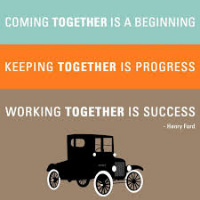
Perspective
What can you control?
When you have challenging times at work, do you pause and take a step back?
Stepping back can help you identify and focus on what you have control over. This enables you to be realistic about what you can achieve rather than waste time and energy on the things you can’t influence or change.
As part of sustaining a healthy physical and mental perspective, keeping aspects of work and home life separate can help.
We touched upon some of these earlier like switching off and managing time effectively but what else can we do to give a little more balance to our lives when working from home?
- Have set working hours and stick to them
- If possible, have a designated workspace
- Get dressed for work, it will increase productivity
- Take regular breaks and eat away from your desk
- Try to get outside every day for some natural sunlight
An exercise I have found useful around perspective is to ask empowering questions. Have you tried this before?
Take a situation or circumstance and ask one or more of the following:

- What is funny about this?
- How can this help me and others?
- What is good about this?
- How is this making me…..stronger, smarter etc?
Go on, give it a try! What do you think? Was it helpful?
The final area we will look at in building resilience, is prioritising and working to yours and others strengths.
Priorities and Strengths
How often do you reflect and evaluate what your priorities are?
Having a clear sense of purpose for yourself and your role within your organisation is essential to develop and maintain a positive outlook.
Reflect on a successful time, what did you do then to make it so? What can you apply from your successes to this situation, to make this time a success too?
An article from People Goal looks at employee strengths and weakness and has a good template to look at not just the team you manage, but your own swat analysis too.
Remember there is always room for further improvement to help build resilience. Can you build on your strengths or you could even take one of your weaknesses and practice personal and professional development in that area?
As you battle it out on the workplace frontline, consider the factors that help us strengthen our resilience and wellbeing.
Think about the skills needed to remain balanced and to help you deal with strong and difficult emotions at this time.
Strengthening your resilience is a smart thing to do!
Be confident and use your inner strength to successfully navigate these unprecedented times we find ourselves in.
But keep in mind you can’t do it to the best of your ability without resilience and practising wellbeing and self-care.
This article was written by Emma-Louise Fusari, founder of In-House Health. Emma has been a nurse for 18 years and she helps workplaces get to the root cause of health and culture issues. Feel free to contact Emma with your feedback on the article at emma@inhousehealth.co.uk and connect with her on LinkedIn